

 Do you know how to spot an imposter scam? Imposter scams often begin with a call, text message, or email. Use the American Bankers Association Foundation and Federal Trade Commission’s’ joint infographic to educate yourself.
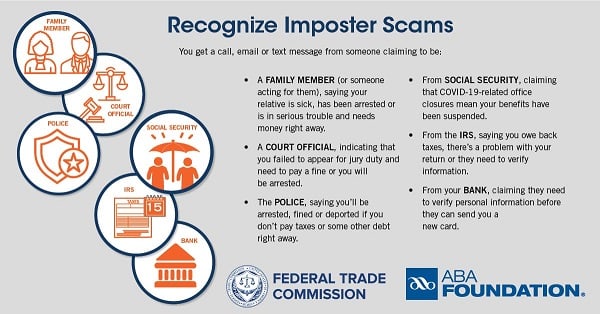 According to the FTC, Americans lost more than $667 million to imposter scams in 2019. Imposter scams take many forms, including call, email or text message.
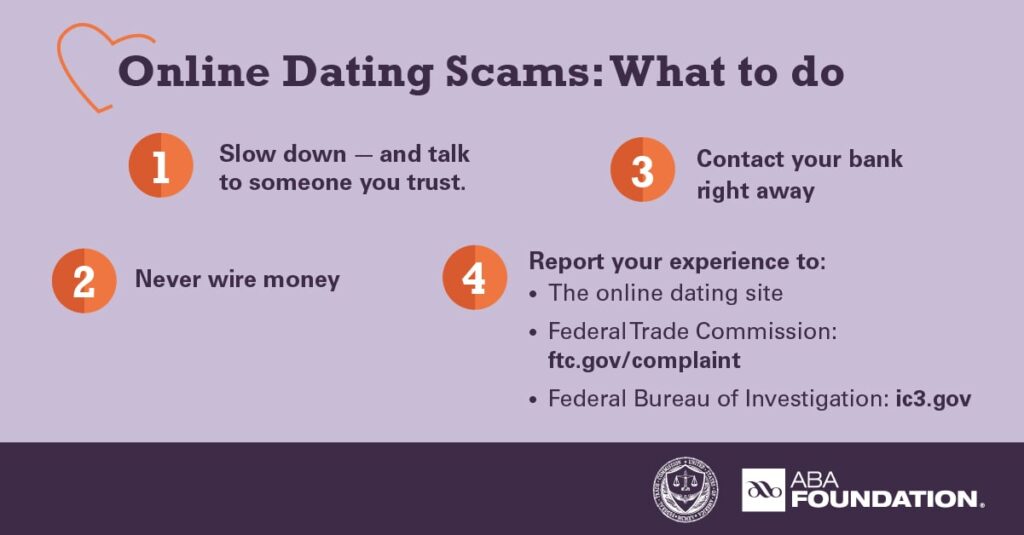
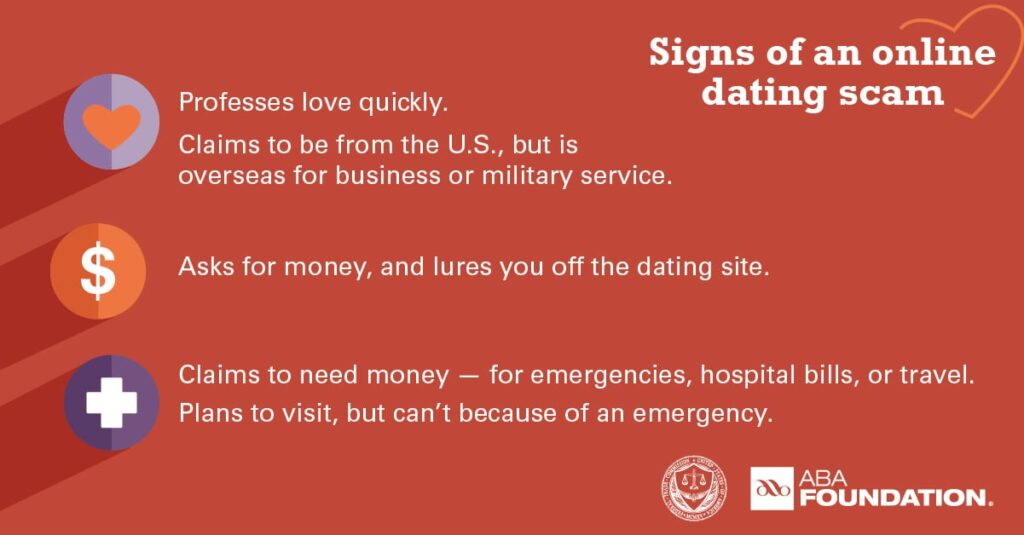 Do you know the signs of an online dating scam? Red flags of romance scams include people who:
- Profess love quickly
- Lure you off the dating site
- Need money for emergencies
 Older adults lose billions of dollars each year to fraud. Financial abuse against older Americans can take many forms, from illegal debits, to third-party scams and even unauthorized withdrawals by an approved caregiver. Learn how to prevent elder financial abuse through these free resources from the American Bankers Association Foundation: https://bit.ly/2PLvA5r
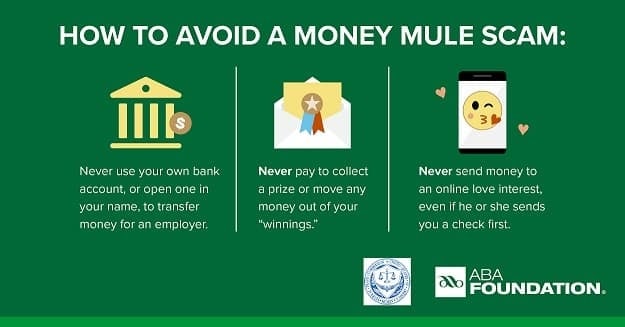 If someone sends you money and asks you to send it to someone else, stop! You could be what some call a money mule.
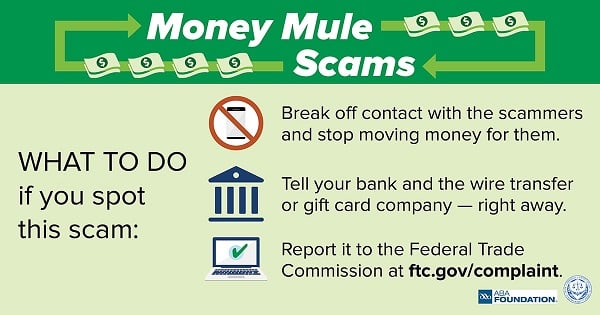 Do you know what to do if you spot a money mule scam? Follow these steps:
- Break off contact with scammer
- Tell your bank
- Report it to the FTC
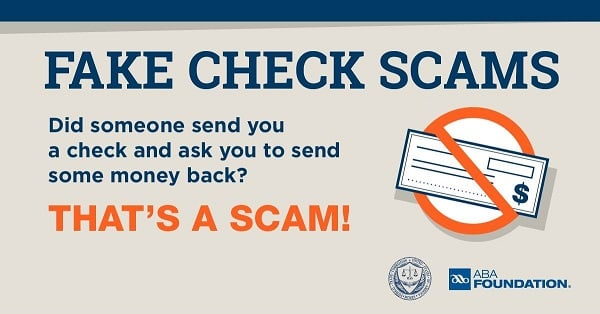 Fake checks continue to be one of the most common instruments used to commit fraud against consumers.
 Granting a power of attorney is a major commitment. Learn tips on how to choose the best power of attorney for your situation from the American Bankers Association Foundation’s Safe Banking for Seniors program: https://bit.ly/32PCPPO